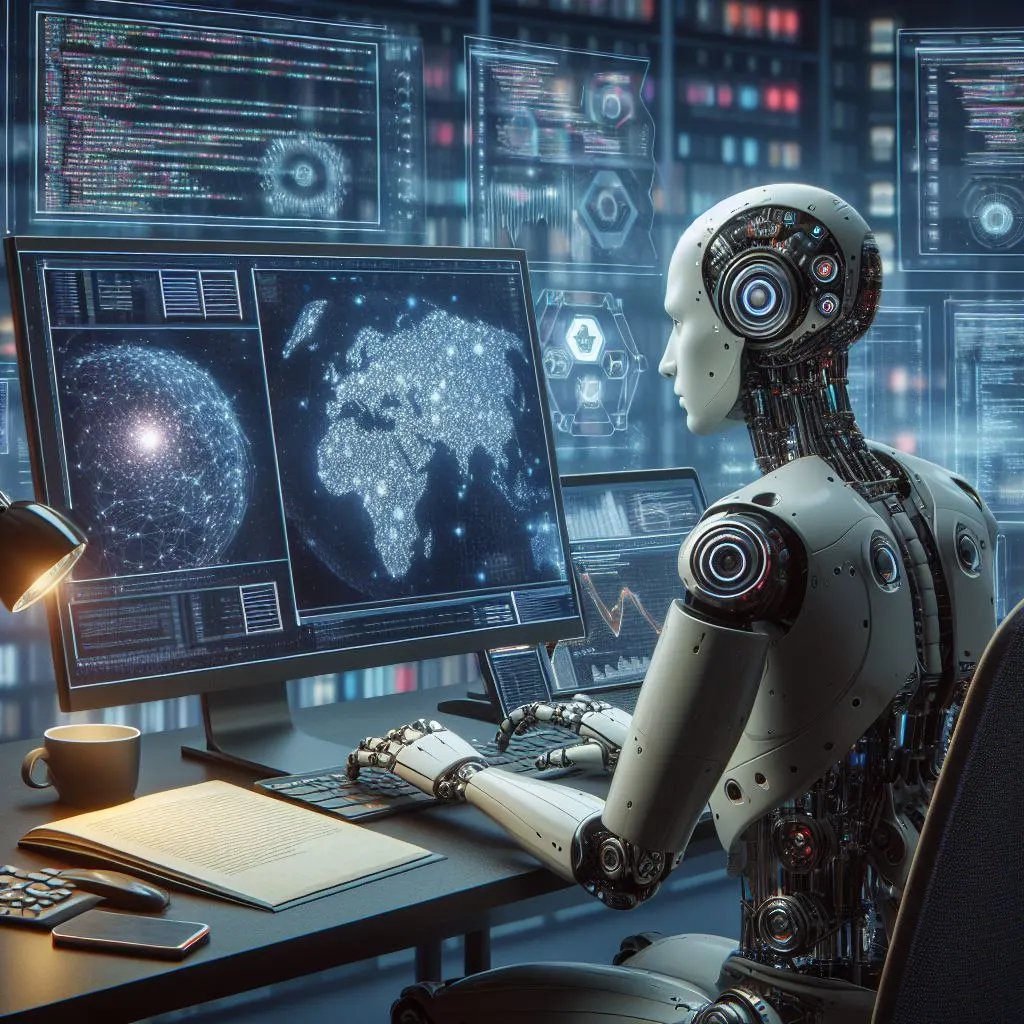
The Evolution of Artificial Intelligence: A Comprehensive Guide
What is Artificial Intelligence?
Understanding the Basics of AI
Artificial Intelligence (AI) is the simulation of human intelligence processes by machines, especially computer systems. These processes include learning (the acquisition of information and rules for using the information), reasoning (using rules to reach approximate or definite conclusions), and self-correction.
Types of Artificial Intelligence
- Narrow AI: Also known as Weak AI, this type of AI is designed for a specific task, such as facial recognition or language translation.
- General AI: Also known as Strong AI, this type of AI can perform any intellectual task that a human being can.
- Superintelligent AI: This hypothetical AI surpasses human intelligence and capabilities in every way.
Applications of Artificial Intelligence
AI in Healthcare
AI is revolutionizing the healthcare industry by improving diagnostics, personalizing treatment plans, and streamlining administrative processes to enhance patient care.
AI in Finance
In the financial sector, AI is used for fraud detection, algorithmic trading, risk management, and customer service, leading to more efficient and effective operations.
AI in Autonomous Vehicles
Autonomous vehicles rely on AI for navigation, object recognition, and decision-making, paving the way for a future where driverless transportation is the norm.
The Ethical Implications of Artificial Intelligence
Bias in AI Algorithms
AI algorithms can inherit biases from the data they are trained on, leading to discriminatory outcomes and reinforcing societal prejudices.
Job Displacement Due to AI
- Impact on the Labor Market: AI automation is predicted to reshape job roles across industries, potentially displacing human workers.
- Reskilling the Workforce: Upskilling and reskilling workers to adapt to AI-driven changes is vital to mitigate job displacement.
- Universal Basic Income as a Solution: Some advocate for Universal Basic Income as a way to address job loss due to AI automation.
The Future of Artificial Intelligence
Advancements in AI Research
- Deep Learning: Neural networks are evolving to mimic the human brain’s capacity for learning and problem-solving.
- Natural Language Processing: AI systems can understand, interpret, and generate human language, enabling more sophisticated interactions.
- Robotics: AI-powered robots are becoming more autonomous and versatile, with applications in manufacturing, healthcare, and beyond.
Challenges and Opportunities in AI Development
- Privacy Concerns: Protecting personal data and ensuring transparency in AI decision-making are critical ethical considerations.
- Regulation of AI Technologies: Governments and organizations are working to establish ethical guidelines and regulations for AI development and deployment.
- Collaborative Human-AI Partnerships: Emphasizing collaboration between humans and AI systems can maximize the strengths of both parties.
Conclusions and FAQs
Summary of Key Points
- AI encompasses various types, from specialized applications to human-like intelligence.
- Its applications are vast, from healthcare to finance and autonomous vehicles.
- Ethical considerations like bias and job displacement must be addressed.
- The future of AI holds great promise but comes with challenges that require careful navigation.
FAQs on Artificial Intelligence
- What is the difference between AI and Machine Learning? AI is the broader concept of machines being able to carry out tasks in a way that we would consider “smart,” while Machine Learning is a subset of AI where machines learn from data.
- Can AI truly replicate human intelligence? While AI can perform specific tasks well, replicating human intelligence in its entirety remains a distant goal.
- How can individuals prepare for the AI-driven future? Continuous learning, adaptability, and embracing AI as a tool for collaboration are key in preparing for the evolving landscape.
Remember, AI is a powerful tool that can enhance our lives in numerous ways, but it is essential to navigate its development with ethical considerations and a human-centric approach. Embrace the opportunities AI presents and remain vigilant in addressing its challenges for a more inclusive and equitable future.

Table of Contents
- Artificial Intelligence: The Future of Technology
- Understanding Artificial Intelligence
- Applications of Artificial Intelligence
- Challenges and Opportunities
- Conclusion
Artificial Intelligence: The Future of Technology
Alternative Title: Revolutionizing Industries with Artificial Intelligence
Artificial intelligence (AI) has become the cornerstone of innovation in the technology sector. From self-driving cars to virtual assistants, AI is transforming the way we interact with machines. In this blog post, we will delve into the world of artificial intelligence, exploring its applications, challenges, and opportunities for the future.
Understanding Artificial Intelligence
Artificial Intelligence Explained
Artificial intelligence refers to the simulation of human intelligence processes by machines, particularly computer systems. These processes include reasoning, learning, problem-solving, perception, and language understanding. AI systems can adapt and improve their performance through experience, making them an invaluable asset in various industries.
Related Keyword: Machine Learning
Machine Learning in Artificial Intelligence
Machine learning is a subset of AI that enables machines to learn from data without being explicitly programmed. This technology allows AI systems to identify patterns, make decisions, and improve their performance over time. Machine learning algorithms power many AI applications, from recommendation systems to predictive analytics.
Applications of Artificial Intelligence
AI in Healthcare
Artificial intelligence is revolutionizing healthcare by streamlining diagnosis, treatment, and patient care. AI-powered systems can analyze medical images, predict disease outbreaks, and personalize treatment plans for patients. By leveraging AI, healthcare providers can deliver better outcomes and improve patient experiences.
AI in Finance
In the finance industry, artificial intelligence is used for fraud detection, risk management, and algorithmic trading. AI systems can analyze vast amounts of financial data in real-time, enabling financial institutions to make informed decisions and mitigate risks. Additionally, AI-powered chatbots are transforming customer service in the banking sector.
AI in Marketing
Artificial intelligence is reshaping the marketing landscape by enabling personalized campaigns, predictive analytics, and customer segmentation. AI-powered tools can analyze consumer behavior, optimize ad campaigns, and deliver targeted content to the right audience. Marketers can leverage AI to boost engagement, drive conversions, and maximize ROI.
Challenges and Opportunities
Challenges of Artificial Intelligence
Despite its numerous benefits, artificial intelligence presents several challenges, including ethical concerns, job displacement, and data privacy issues. As AI becomes more pervasive, policymakers, businesses, and society need to address these challenges to ensure responsible AI development and deployment.
Opportunities with Artificial Intelligence
On the flip side, artificial intelligence offers immense opportunities for innovation, job creation, and economic growth. By harnessing the power of AI, organizations can automate repetitive tasks, enhance decision-making, and unlock new revenue streams. Embracing AI can drive efficiency, productivity, and competitiveness across industries.
Conclusion
In conclusion, artificial intelligence is not just a buzzword—it is a transformative technology that is reshaping industries and driving innovation. Whether it’s healthcare, finance, marketing, or any other sector, AI is revolutionizing the way we work, live, and interact with the world. As we navigate the challenges and opportunities of artificial intelligence, it is crucial to prioritize ethical AI practices, nurture talent in AI, and embrace the future of technology.
Remember to stay tuned for more insights on the future of artificial intelligence and its impact on various industries. Share your thoughts on how AI is shaping the world around us! #ArtificialIntelligence